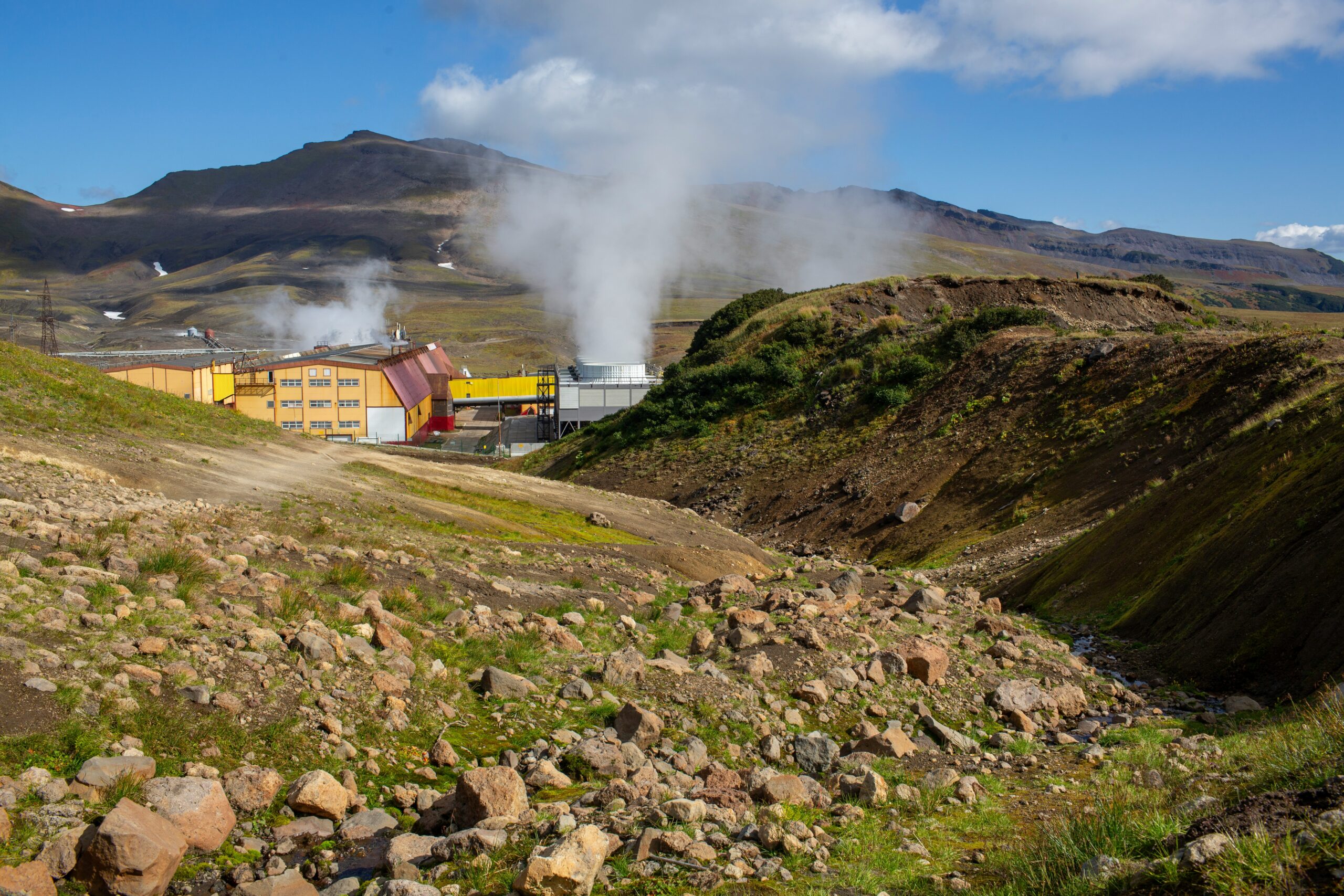
What will it take to turn Europe’s geothermal potential into a scalable source of industrial heat?
Europe has significant geothermal resources, while industry has a growing need for reliable, low-carbon heat. Connecting these two opportunities could play an important role in industrial decarbonisation.
Geothermal energy offers a distinctive advantage: continuous renewable heat that is not dependent on weather conditions. Yet its contribution to Europe’s renewable heating and cooling mix remains limited, particularly in industry.
The new GEOFLEXHEAT policy brief examines what is needed to unlock this potential, bringing together European policy evidence, research and insights from the project’s demonstration environments.
A key challenge is the temperature gap between geothermal resources and industrial process requirements. GEOFLEXHEAT addresses this through the integration of advanced geothermal heat extraction, high-temperature heat pumps, thermal energy storage and digital optimisation, enabling geothermal heat to be upgraded and managed more flexibly for industrial applications.
But scaling industrial geothermal is not only a technical challenge. Geological and drilling risks, high upfront costs, permitting barriers, limited subsurface data and skills gaps can all affect project feasibility and investment.
Drawing on the contrasting contexts of Italy and Iceland, the brief examines how resource conditions, geothermal ecosystems, regulation and investment frameworks shape deployment.
It also identifies policy priorities — from exploration-risk mitigation and improved financing to streamlined permitting and stronger recognition of renewable industrial heat in national strategies.
With geothermal investment gaining momentum globally, the opportunity for Europe is growing.
Read the full GEOFLEXHEAT policy brief to discover the evidence, lessons and policy recommendations for accelerating geothermal heat deployment across European industry.